
How Livermore Residents Are Found
A useful Livermore residents directory search begins with a clear record question. The Alameda County Assessor can show parcel facts, but its online property search leaves owner names out. The Clerk-Recorder supplies party names in recorded documents, while the Registrar of Voters offers self-service confirmation rather than a public name list. Courts, vital-record custodians, libraries, and state agencies answer different questions. A name search can suggest a path, but it should not merge two people until independent details agree.
Use the record trail in a fixed order. It reduces false matches and keeps a deed, a business filing, or an obituary in its proper context.
- Write down the known name, spelling variants, address clue, date range, and reason for the search.
- For an address, save the APN and situs details from the Alameda Property Assessment Information search.
- Use the Alameda Superior Court online-services page for public case indexes, then read the docket role and status.
- Use the county or state custodian for a vital certificate, and distinguish an informational copy from an authorized certified copy.
- For older residents, search library indexes, the digitized Livermore Herald, cemetery records, directories, and census material together.
Note: A search lead becomes useful evidence only when the name, place, date, and record role fit the same person.
Livermore Resident Records Desks
Livermore records are split by government level. City Hall keeps municipal legislation, permits, and police records. Alameda County keeps deeds, assessment data, certificates, tax bills, elections administration, and Superior Court files. Oakland is the county seat, but the Dublin Clerk-Recorder satellite and the Pleasanton courthouse are practical east-county access points. That division matters: Livermore City Hall is not the place to ask for a county deed book.
Livermore City Clerk
City Hall
1052 South Livermore Avenue
Livermore, CA 94550
925-960-4200
Alameda Clerk-Recorder
Dublin satellite
7600 Dublin Blvd., Suite 160
Dublin, CA
County records include deeds, maps, liens, FBN filings, and vital certificates.
Alameda Registrar of Voters
1225 Fallon Street, Room G-1
Oakland, CA 94612
510-272-6973
The Gale-Schenone Hall of Justice in Pleasanton handles east-county court access, though filings may route to another division. The right office is part of the lookup, not a detail to assume from the city name.
Livermore Assessor Resident Records
The online Alameda property portal searches by address or parcel number. It can return an APN, situs address, parcel-map link, land-use code, assessed land and improvement values, tax year, transfer or assessment information where displayed, building characteristics, and a tax-bill link. It does not publish owner names online. That omission is deliberate, so a blank owner field is not a failed search.
Ownership remains available through the Assessor public-records counter, limited telephone inquiry, or a written request. Keep the online parcel facts separate from the offline name result. A mailing address can differ from the physical situs, and neither one proves every person in a household.
| Address | Autocomplete property address; choose the suggested situs address. |
|---|---|
| Parcel Number | Autocomplete APN route; use dashes and omit leading zeroes. |
| Search | Returns assessment and property detail, not an online owner name. |
| Owner inquiry | Use the public counter, limited phone route, or written response channel. |
Local search tip. Treat the portal as a parcel-finding tool. Take the APN to the assessor counter before linking a person to the property.
Current Livermore Directory Sources
No single current Livermore residents directory lists every household. Each official source has a narrow purpose and a different access rule. The table below shows what a search can and cannot establish.
| Source | What It Can Show | Keeper | Access |
|---|---|---|---|
| Assessment roll | Parcel facts and owner information through offline channels | Alameda Assessor | Online facts; counter, phone, or written owner inquiry |
| Recorded-document index | Named parties, instruments, dates, and legal descriptions | Clerk-Recorder | 1969-present electronic index; older manual research |
| Voter record | A voter’s own registration and district details | Registrar of Voters | Self-service or approved statutory request |
| Public court docket | Party roles, case dates, status, hearings, and dispositions | Alameda Superior Court | Online index or clerk request, with exclusions |
| Business or license file | Public affiliation, status, and address of record | California agencies | Free state searches; affiliation is not residence proof |
A person-focused question needs the right record role and date. A street-focused question needs the parcel, deed, permit, and map chain rather than a name-only search.
Livermore Court Records Need Context
DomainWeb has historically supplied public civil, family, probate, and mental-health case access, while the Alameda criminal ePortal handles criminal search functions. Search by last name or business name, add a first name when available, and narrow with case type or filing dates. A court result is a lead about a party in a case. It is not proof that the party lived in Livermore.
Read the register of actions before ordering pages. A public docket may show a case number, title, case type, filing date, status, party names and roles, hearing dates, departments, disposition entries, and document titles. Scanned pleadings may not be remotely available. Sealed, juvenile, adoption, confidential, and some family or mental-health material is excluded or restricted.
| Name route | Last name or business name is required for a party search; spelling variants help. |
|---|---|
| First name | Optional narrowing field for common surnames. |
| Case number | Alternative route when an exact identifier is known. |
| Case type and dates | Optional filters that reduce same-name results. |
Open the Alameda Superior Court online-services page before reading the captured court search view.
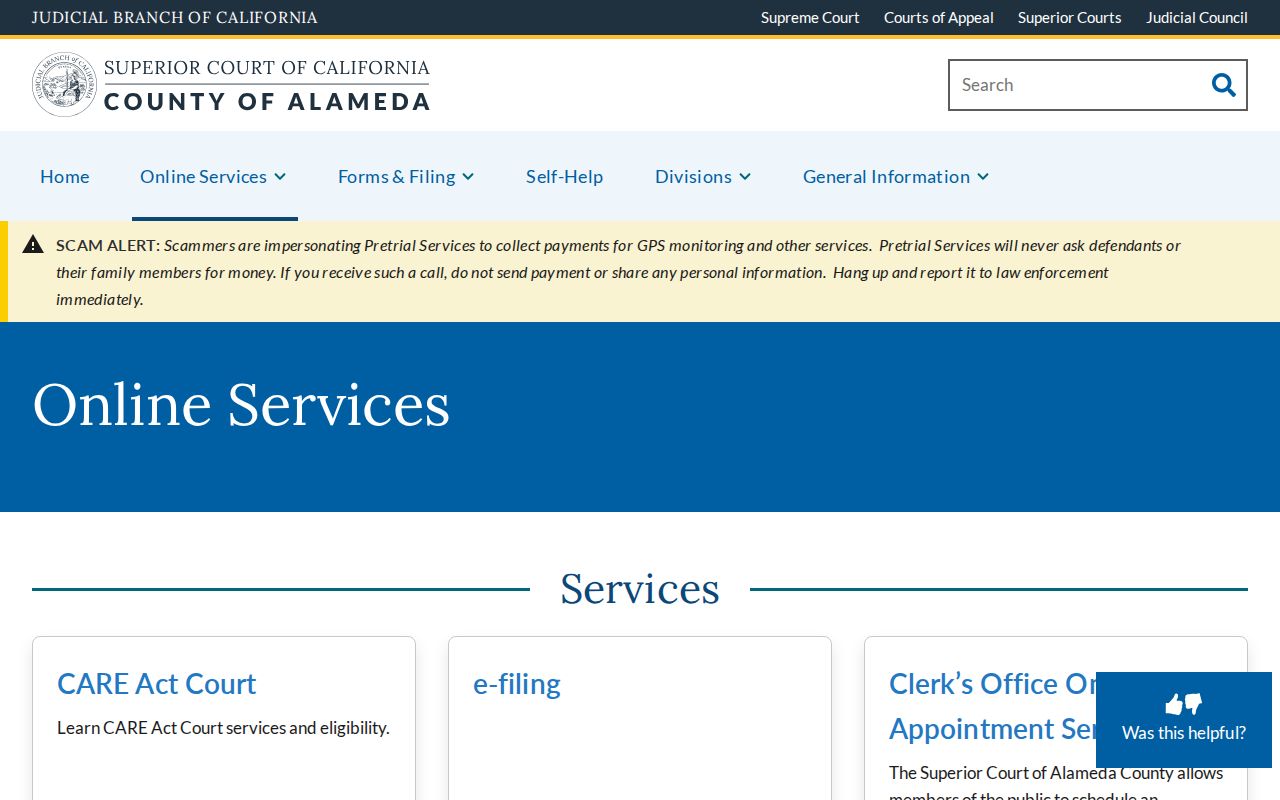
The court portal is a starting point for docket metadata. A party role, date, and case number still need context before they become an identity match.
Note: Ask the clerk for the register of actions first when a file is archived or the document set is large.
Livermore Voter Lookup Is Self-Service
Alameda My Voter Profile confirms a voter’s own registration information, polling place, sample ballot, vote-by-mail status, language preference, and eligible districts. It is not a public name or street directory. The sign-in fields are month, day, and year of birth plus a California driver license or California ID, or the last four digits of a Social Security number.
California permits voter-file release only for election, scholarly, journalistic, political, or governmental purposes. An identified-voter request requires full name, date of birth, county, residence address, a stated purpose, and certification. Driver-license or state-ID numbers, Social Security numbers, and signatures are never released. Safe at Home records and other protected records stay outside ordinary access.
Open the California Safe at Home program before reading the privacy reference captured here.
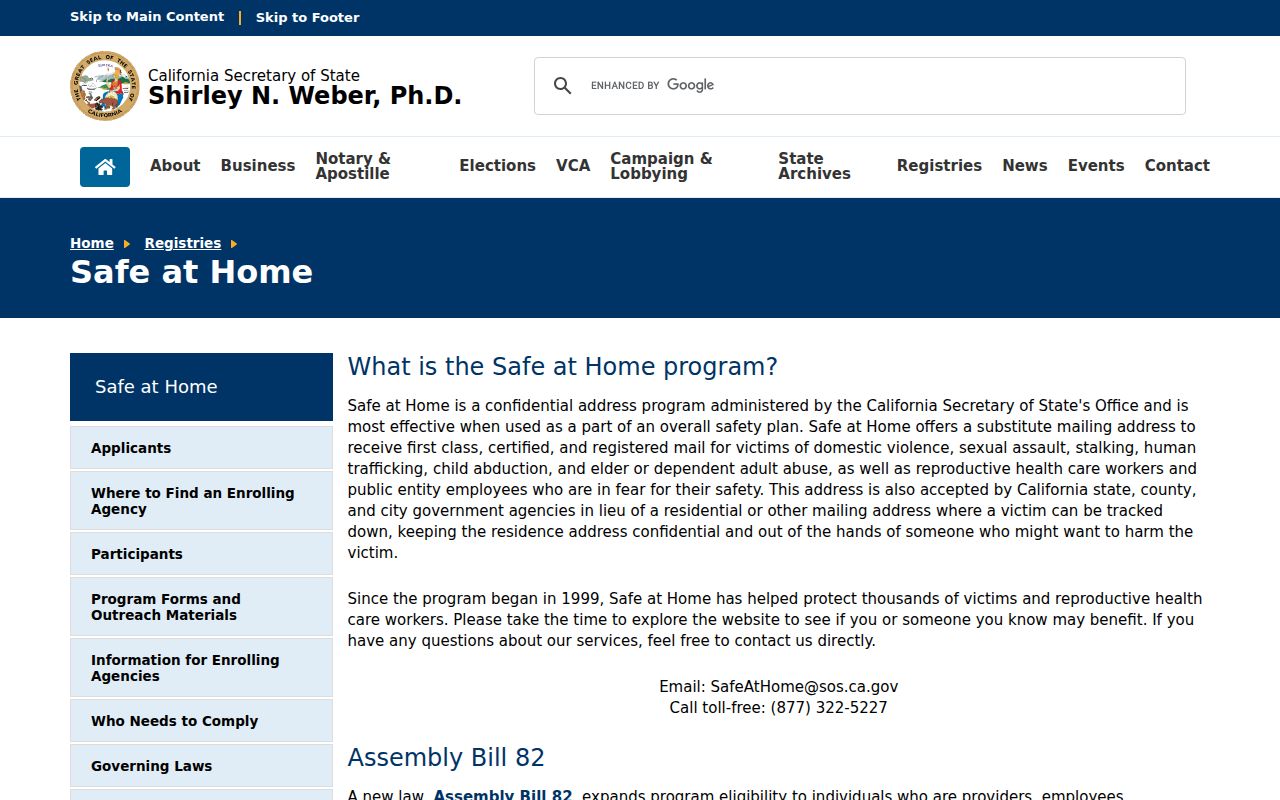
The substitute address and confidential-voting protections help eligible people keep location information out of ordinary disclosure, which is why a public roll cannot be treated as a complete household list.
Livermore Vital Records Are Not Open Indexes
Alameda County Clerk-Recorder and California Department of Public Health issue birth, death, and marriage certificates for qualifying events. Applications ask for the record type, names, event date and place, parent information when applicable, number of copies, applicant identity, relationship or authorized category, purpose, signature, and payment. An authorized certified copy is limited to the categories listed in Health and Safety Code §103526. Anyone may obtain an informational certified copy, but it carries a notice that it cannot establish identity.
There is no verified universal current-resident birth or death index. Historical obituary and cemetery indexes can supply a clue, while the certificate custodian decides whether a copy may be issued. Adoption files are confidential under Family Code §9200 et seq. Divorce records also split between the Superior Court file and a CDPH informational record for covered years.
The CDPH vital-record applications explain the statewide route. Use the county order page for Alameda events, and do not assume a missing index means a missing certificate.
Livermore Address-to-Person Records
An older Livermore address needs several record layers. Start with a normalized street address and APN. Follow the deed chain through the Clerk-Recorder, then compare the legal description with the parcel map. Bring in city permits, council actions, historical directories, the public census, newspapers, probate, and obituaries only after the property identity is stable. A deed names a party to a transaction; a directory or census entry is stronger evidence of household presence for its own date.
Livermore’s history makes this layered method valuable. Railroad-era town lots, ranch and winery names, trusts, partnerships, and later subdivisions can put one property under several names. The Livermore residents directory works best when each name is tied to an exact date, source, and role instead of treated as a single timeless roster. The complete parcel chain is organized in the Livermore by-street records route.
- Normalize the address and save the APN, situs, and map link.
- Obtain the current owner through the Assessor’s offline channel.
- Search the owner as grantee, inspect the acquisition deed, and record the grantor and legal description.
- Move backward through earlier grantees, then cross the 1969 index cutoff by using microfilm or books.
- Pair the property chain with the library, census, newspaper, and probate trail.
Livermore City Records Online
Livermore’s City Public Records Online gateway separates Request Records, Search Records, Council Records, and Campaign Disclosures. Its Laserfiche search instructions cover the repository, which contains Council minutes and ordinances from 1876-current, resolutions from 1944-current, Redevelopment Agency minutes from 1981-current, agenda packets from January 10, 2000-current, and summary agendas from November 24, 2003-current. These records can place names beside petitions, streets, subdivisions, claims, and civic actions.
Browse opens the Public Folder hierarchy. Search accepts a word or phrase and exposes two WebLink search modes. Scanned pages use the PDF icon for conversion, with a 75-page maximum per batch. Allow pop-ups when the repository requires them. If the repository does not contain the desired existing record, make a focused CPRA request rather than asking staff to create a custom explanation.
| Browse | Navigate public folders and their record groupings. |
|---|---|
| Search | Run a single word or phrase through the repository. |
| PDF icon | Convert scanned pages, up to 75 pages per batch. |
| Request Records | Use the CPRA fallback for an existing, focused record description. |
Livermore Business Records Need Context
State business and professional files can distinguish people with common names, but their addresses are usually business or professional addresses. California Secretary of State bizfile results commonly show entity name and number, status, formation or jurisdiction, principal or mailing addresses, agent for service, and filed statements or images. The California Department of Consumer Affairs search can show board or license type, name, license number, city or county, status, issue or expiration, and published discipline.
Use these sources as affiliation evidence. A winery, contractor, laboratory, or professional practice can connect a name to Livermore without proving a home address. The same care applies to Alameda fictitious-business-name filings and State Controller unclaimed-property results, which may show a historic mailing address or reporting business.
Open the California business entity search before reading the captured result view.
The entity result is most useful when its role, date, and address agree with a deed, court file, or published biography. Treat the filing as a business connection, not a resident roll.
For a regulated profession, open the California DCA license search and compare the exact license number. The State Controller unclaimed-property search is another name trail, but a result indicates a historic financial association and requires identity and entitlement proof.
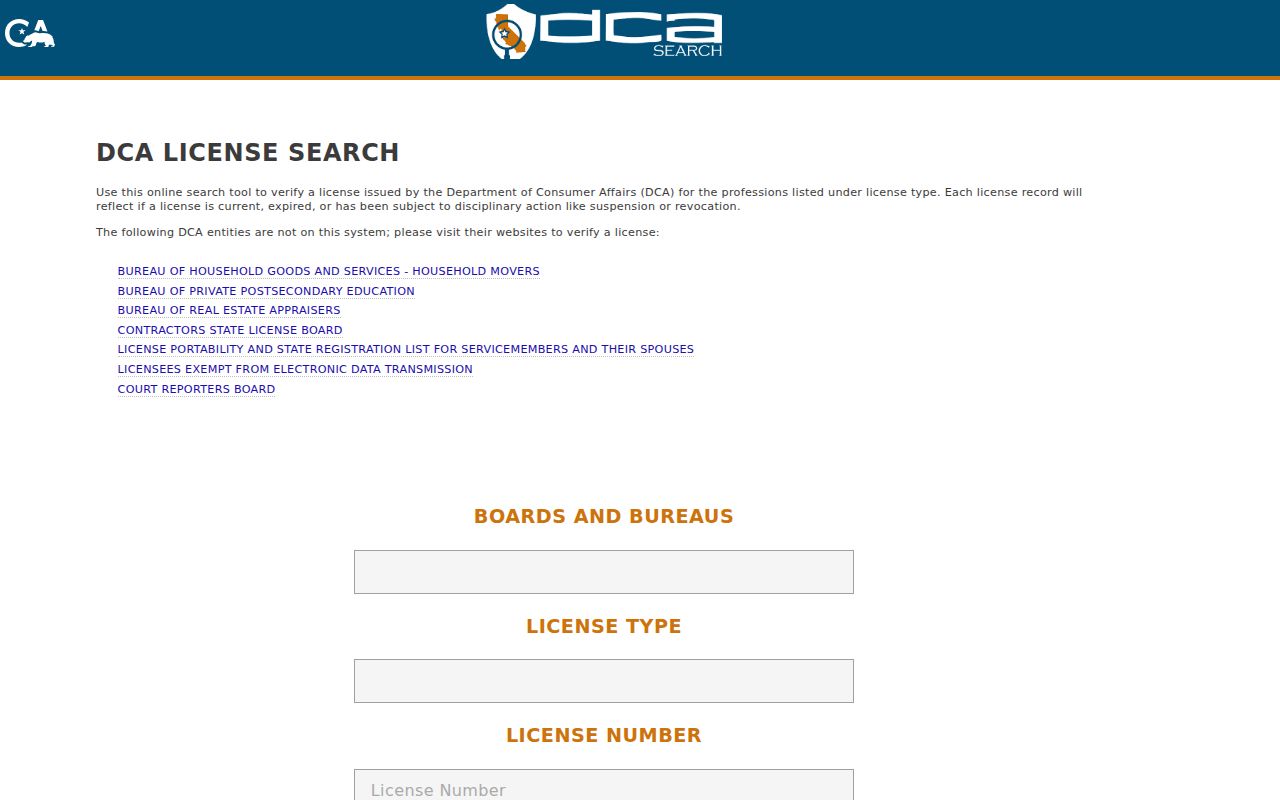
Those public result screens help separate similar names while preserving the limit that an address of record is not necessarily a residence.
Open the California State Controller unclaimed-property search before interpreting the final captured result view.
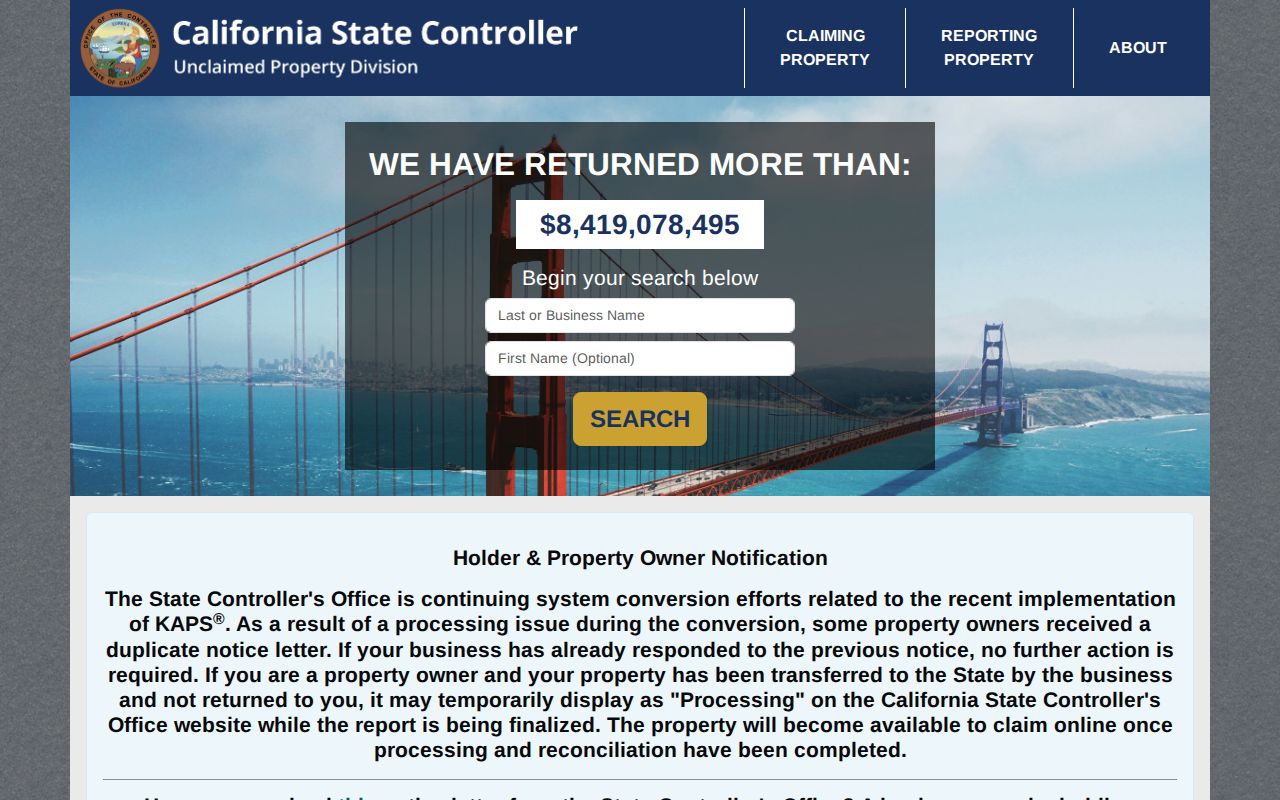
Check the official claim process directly. California says the search and claim route is free, so an unsolicited demand for payment deserves independent verification.
Livermore Directory History Shelf
Livermore Public Library is the practical bridge when current portals stop. The Civic Center library offers in-library Ancestry Library Edition, genealogy help, HeritageQuest, California Digital Newspaper Collection access, Online Archive of California photographs, and links to the Livermore-Amador Genealogical Society, Heritage Guild, and a local Family History Center. Search the catalog for “Livermore directory,” “telephone directory,” “Polk,” “Haines criss-cross,” school titles, and family histories.
The Barbara Bunshah Selective Subject Index covers Enterprise 1874-1876 and segments from 1899 through 2002 across several local newspaper titles. It is an index, not the full article. Retrieve the cited page on Civic Center microfilm. The Tri-Valley obituary index covers 1874-2004, but the absence of a name is not conclusive because pre-1980 Valley Times and Independent obituaries are omitted.
The Heritage Guild History Center occupies the 1911 Carnegie Library at 2155 Third Street. Posted hours are Thursday through Saturday, 11:30 a.m. to 4 p.m., and the first two Sundays, 10 a.m. to 2 p.m., subject to live confirmation. Its holdings include newspapers, maps, property-tax logs, oral histories, photographs, business directories, and archives. A focused request gives volunteers a better chance of finding a file or microfilm item. Older entries are interpreted in the Livermore city directory collections.
Livermore Records After the 1969 Divide
Alameda County recorder records begin in 1853. The electronic name index begins in 1969. That year marks an access divide, not a loss of older deeds. Documents from 1969 forward can be found through the electronic name route, though the index remains a finding aid. Records from 1853 through 1968 require microfilm, manual grantor-grantee indexes, deed books, mail research, or an in-person visit.
Livermore’s municipal record trail starts earlier in a different system. City Council minutes and ordinances run from 1876-current, while the city itself has a more complex incorporation history in local sources. The railroad’s arrival and the town-lot era connect deeds, maps, and civic minutes. A street, subdivision, or annexation clue can therefore help bridge a gap in a name index.
| Era | Primary trail | Best access question |
|---|---|---|
| 1853-1968 | Manual indexes, microfilm, deed books | Which party and legal description appear before electronic indexing? |
| 1969-present | Electronic name index plus document copies | What instrument number and document image should be checked? |
| 1876-current civic record | City Laserfiche minutes and ordinances | Was a street, parcel, or petitioner discussed by the city? |
Livermore Residents Cross Record Boundaries
Postal Livermore and incorporated Livermore are not the same geography. ZIP 94550 broadly covers central, south, and east Livermore plus rural eastern territory. ZIP 94551 broadly covers north and northwest territory. The City map, parcel geometry, and city-limit layer decide municipal jurisdiction. County District 1 includes Livermore and much of the surrounding unincorporated valley.
That distinction changes the office to contact. A Livermore mailing address may point to a county parcel outside the city, while a city record may use an address format that does not answer the postal question. Keep the USPS delivery address, situs, mailing address, APN, and legal description as separate fields. The USPS city and state lookup verifies the mail route; county and city maps resolve records jurisdiction.
The final step in a careful Livermore residents directory search is a source note: record the custodian, URL, date checked, exact spelling, and whether the result shows ownership, registration, a historic association, or a household entry. That small habit keeps a useful lead from becoming an unsupported claim.