
Livermore Resident Lookup Record Map
A useful resident lookup combines sources without pretending they are interchangeable. The assessment roll can connect a parcel to an owner through offline access. Recorded documents show named parties and legal descriptions. Court records show public case roles and events. Vital certificates answer event and relationship questions under eligibility rules. Voter information is restricted, and business or license files show affiliation rather than a home.
| Record | What It Confirms | Where | Access |
|---|---|---|---|
| Assessment roll | Parcel ownership and separate mailing destination | Alameda Assessor | Online parcel facts; owner at counter, by limited phone, or written inquiry |
| Recorded document | Named party, transaction, date, and legal-property connection | Alameda Clerk-Recorder | Free index; paid copies; manual route before 1969 |
| Superior Court case | Party role, dates, status, allegations, orders, or disposition in public file | DomainWeb or criminal ePortal | Public index or clerk request; exclusions apply |
| Vital record | Event identity and relationship facts | Alameda Clerk-Recorder or CDPH | Authorized or informational certificate rules |
| Voter record | Registration, address, status, or district information | My Voter Profile or approved file request | Self-check or restricted statutory purpose |
| Business or license record | Entity role, license status, or public address of record | California SOS or DCA | Free public search; not residence proof |
The right route depends on the clue. A parcel clue leads to the assessor and recorder. A historical clue leads to library indexes and directories. A family clue may require probate, an obituary, or an official adoption-information process.
Two Points for a Livermore Resident Lookup
Require at least two independent points before calling two records the same person. Compare a full or middle name, date window, spouse or associate, APN or legal description, profession, license number, and known city. Search married and maiden names, initials, hyphen and space variants, omitted diacritics, business or trust names, and likely spelling errors.
A result from one source can be misleading. A court party may be a claimant, attorney, business, or witness. A professional license may show a business address. A deed party may be a trustee or representative. A newspaper obituary can contain a useful relationship clue but still needs confirmation. Preserve the exact indexed spelling in notes, along with the date, URL, record number, and what the record actually says.
- Party role
- The legal position attached to a court or recorded-document name.
- Index
- A finding aid that points to a record but may not include the full image or context.
- Certified copy
- A copy issued by the custodian with certification; eligibility and fees depend on record type.
- Independent point
- A separate source detail that agrees without simply repeating the first source.
Find a Livermore Resident’s Property Record
The Alameda property portal searches by address or APN but does not publish owner names online. Save the parcel facts first, then use the Assessor public-records counter, limited telephone inquiry, or written request for ownership information. Compare the owner name with the assessment parcel, mailing destination, and legal description. A match can support a property connection, but it does not enumerate the people at the address.
Next, use the owner as a recorder search name. Search near the acquisition date, inspect the deed, and record the grantor, grantee, instrument number, recording date, and legal description. The Livermore by-address records workflow carries that parcel chain into GIS, permits, and street context when the lookup starts from a property rather than a name.
Note: A tax mailing address may be a trust, business, post-office box, or another location, so it is not automatic residence proof.
Read a Livermore Court Record
Alameda Superior Court serves Livermore. Civil, family, probate, and mental-health access has historically used DomainWeb, while criminal matters use the county criminal ePortal. Search with a last name or business name, add a first name when available, and narrow with case type or filing-date range. If the person is a business, search the entity name instead of forcing an individual match.
| Search type | Name, case number, and other portal-specific modes. |
|---|---|
| Last name or business | Required for the party route; try spelling variants. |
| First name | Optional field for a common surname. |
| Case number | Alternative exact route when the identifier is known. |
| Case type and dates | Optional filters for civil, family, probate, or filing windows. |
Public docket results can show case number, title, case type, filing date, status, party names and roles, register-of-actions entries, hearing dates and departments, disposition or judgment entries, and document titles. The Alameda court records instructions explain clerk inspection and copy requests. Scanned pleadings may require a clerk request. Sealed, juvenile, adoption, confidential, and some family or mental-health matters are excluded or restricted.
Open the Alameda DomainWeb information for the civil and probate route. The Alameda criminal ePortal is the related criminal search route.
Federal cases follow a separate path through PACER and the Northern District of California’s CM/ECF information. A federal party result is not an Alameda Superior Court record, so keep the court and case number in the source note.
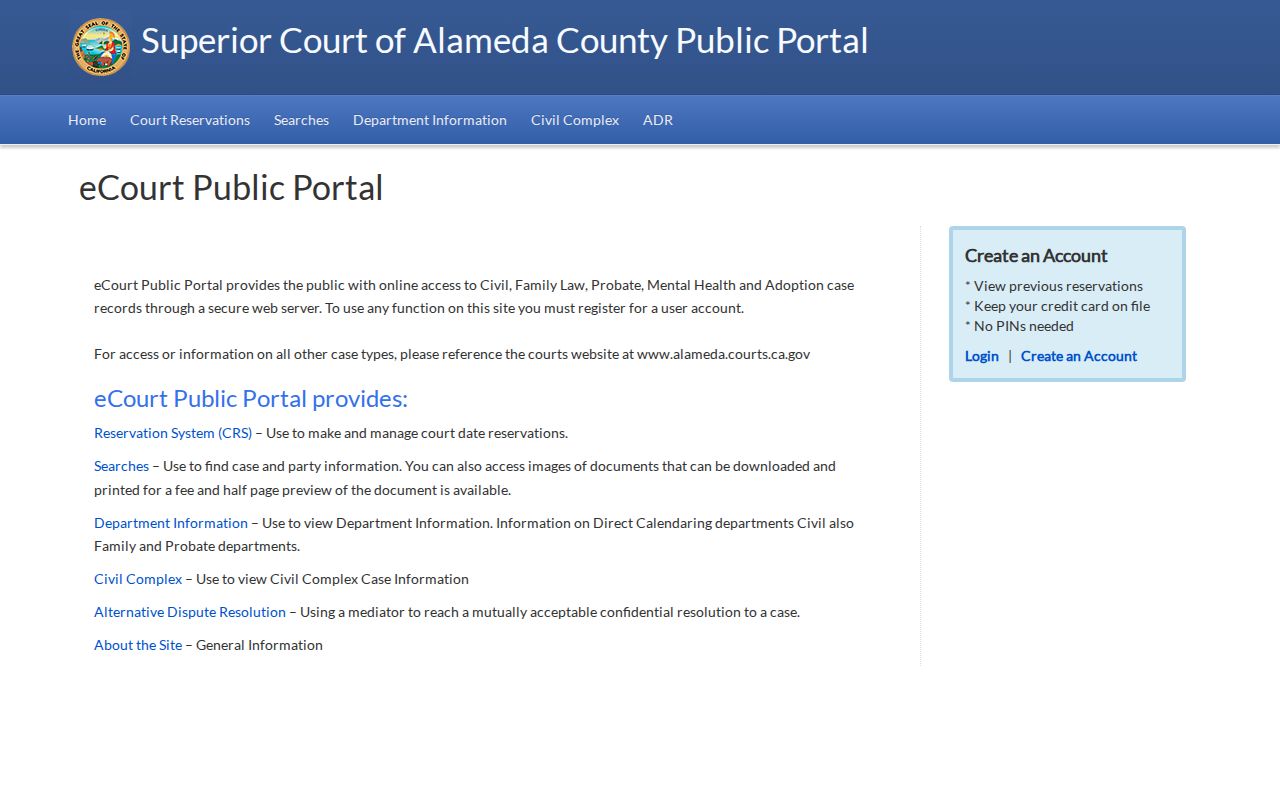
The docket view is most useful when a case role and date agree with a second local record. A same-name case alone does not prove a Livermore residence.
Livermore Vital Records and Certificates
Birth, death, marriage, and divorce records answer event questions rather than serving as an open current-resident list. Alameda County handles certificates for Alameda events, while CDPH provides statewide applications. An authorized certified copy is limited to categories listed in Health and Safety Code §103526. Informational certified copies are more broadly available but are marked not valid to establish identity.
Applications ask for record type, names, event date and place, parent details where applicable, copies, applicant identity and contact information, relationship or authorized category, purpose, signature, and payment. Mail requests for authorized copies require a notarized sworn statement unless the official channel authenticates identity. California has no verified simple rule that all birth records open after a set number of years.
Use the Alameda birth, death, and marriage order page for the county route.
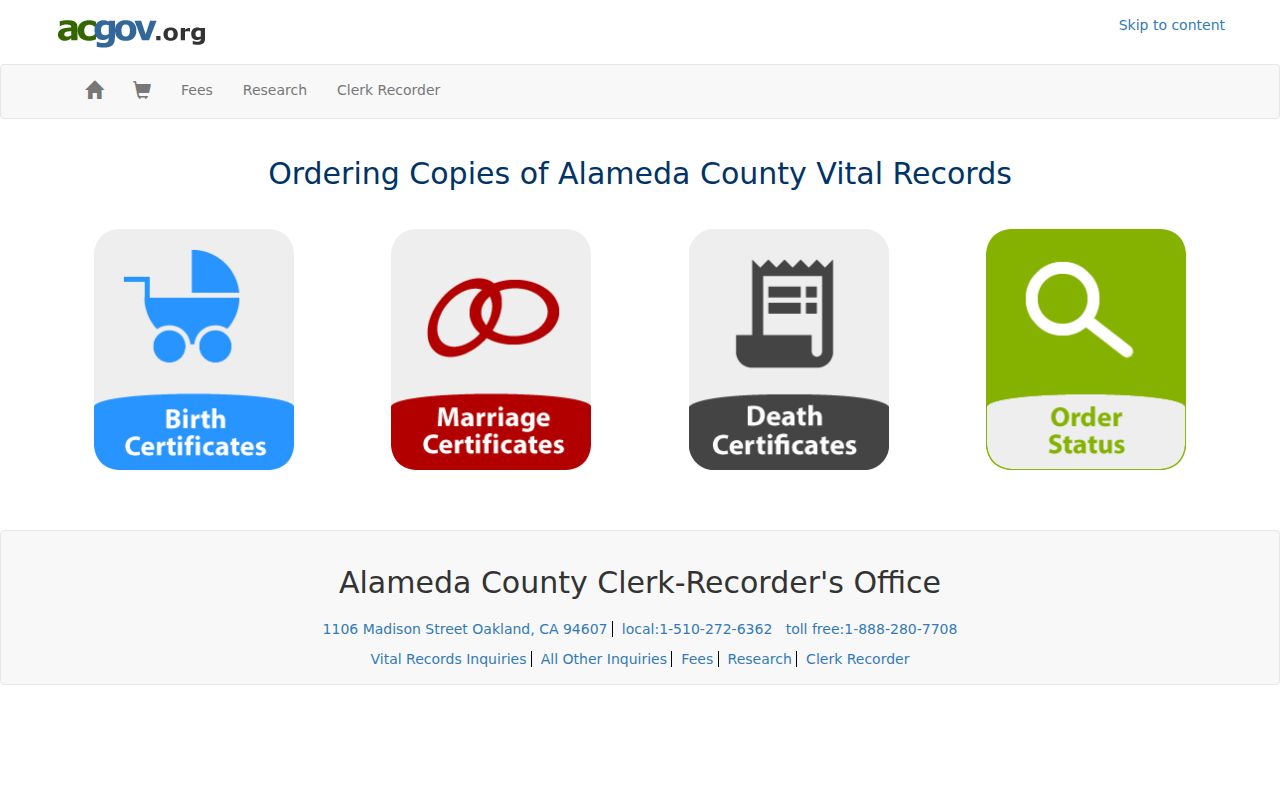
The application screen reinforces the difference between a record clue, a certificate, and the eligibility decision made by the custodian.
Livermore Voter Lookup Needs an Approved Purpose
My Voter Profile is for a voter’s own registration, polling place, sample ballot, vote-by-mail status, language preference, and eligible districts. Its identity fields are month, day, and year of birth plus a California driver license or California ID, or the last four Social Security digits. It does not offer a public name, street, or ZIP browse.
California voter-file access is limited to election, scholarly, journalistic, political, or governmental uses under Elections Code §§2194 and 18109 and 2 CCR §§19001-19012. An identified-voter request calls for full name, date of birth, county, residence address, purpose, and certification. Released files may include name, residence or mailing address, party preference, status, registration date, precinct or district, and participation history, subject to suppression and authorization. Participation does not show selections.
Never-released fields include driver-license or state-ID numbers, Social Security numbers, and signatures. Safe at Home and protected public-safety records are outside an ordinary lookup.
Livermore Lookup Paths for Heirs and Classmates
A person search changes when the goal is family history or reconnection. For an heir, start with the probate index using the decedent’s name, obtain the petition or order for named heirs when available, and corroborate with deeds and obituaries. For a birth-parent question, use California’s official adoption-information route through CDSS or the court. Adoption files are confidential under Family Code §9200 et seq., so public birth indexes are not a substitute.
For a former classmate, the library’s yearbook and catalog holdings, Heritage Guild collections, alumni material, and an obituary or professional record may provide independent clues. Search exact names and dates, then retain the source image or citation. A family-history result may be incomplete without indicating that the underlying collection is partial.
The Livermore city directory collections add dated household and occupation clues, but the edition year and local abbreviation key should be verified at the shelf.
Livermore Business and License Records
California Secretary of State bizfile can show entity name and number, status, formation or jurisdiction, principal or mailing address, agent for service, and filed statements or images. Alameda fictitious-business-name filings cover the last nine years to the current filing. California DCA license search spans many boards and may show license type, number, status, issue or expiration, address of record, and published discipline.
These results help resolve a same-name problem. They do not establish a home. An agent for service, officer, member, contractor, physician, attorney, or business owner may appear at a professional address or in a role that has nothing to do with the person’s residence. Match the role and date with a deed, court docket, obituary, or other independent point.
Livermore Custody Records and Registry Results
Some searches return a custody or registry result rather than ordinary resident evidence. The Alameda County Sheriff Inmate Locator concerns county custody. The California Department of Corrections and Rehabilitation locator concerns current or prior state prisoners. The California Megan’s Law site provides a statutory registry search with legal-use warnings. A booking is not a conviction, and a registry result is not a complete criminal-history record.
Cross-check the court case and disposition where public. Read the agency’s use warning, do not copy protected or unnecessary details, and use the official custodian for corrections. If the goal is a missing person, family contact, or safety question, involve the appropriate agency rather than turning a public result into a personal confrontation.
Open the Alameda inmate locator before interpreting the captured custody screen.
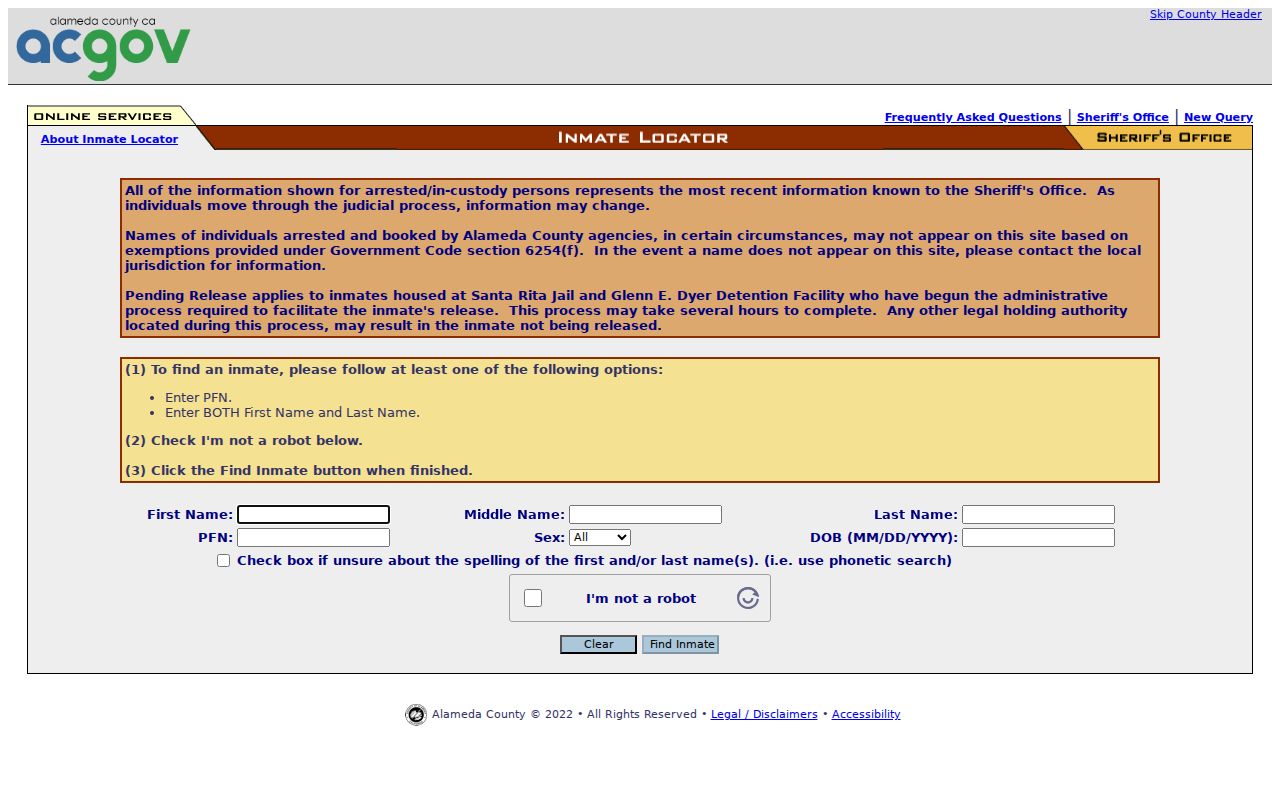
The county locator answers a custody question only. It does not prove present residence, the final court outcome, or a relationship to a Livermore address.
For the separate registry route, open California Megan’s Law.
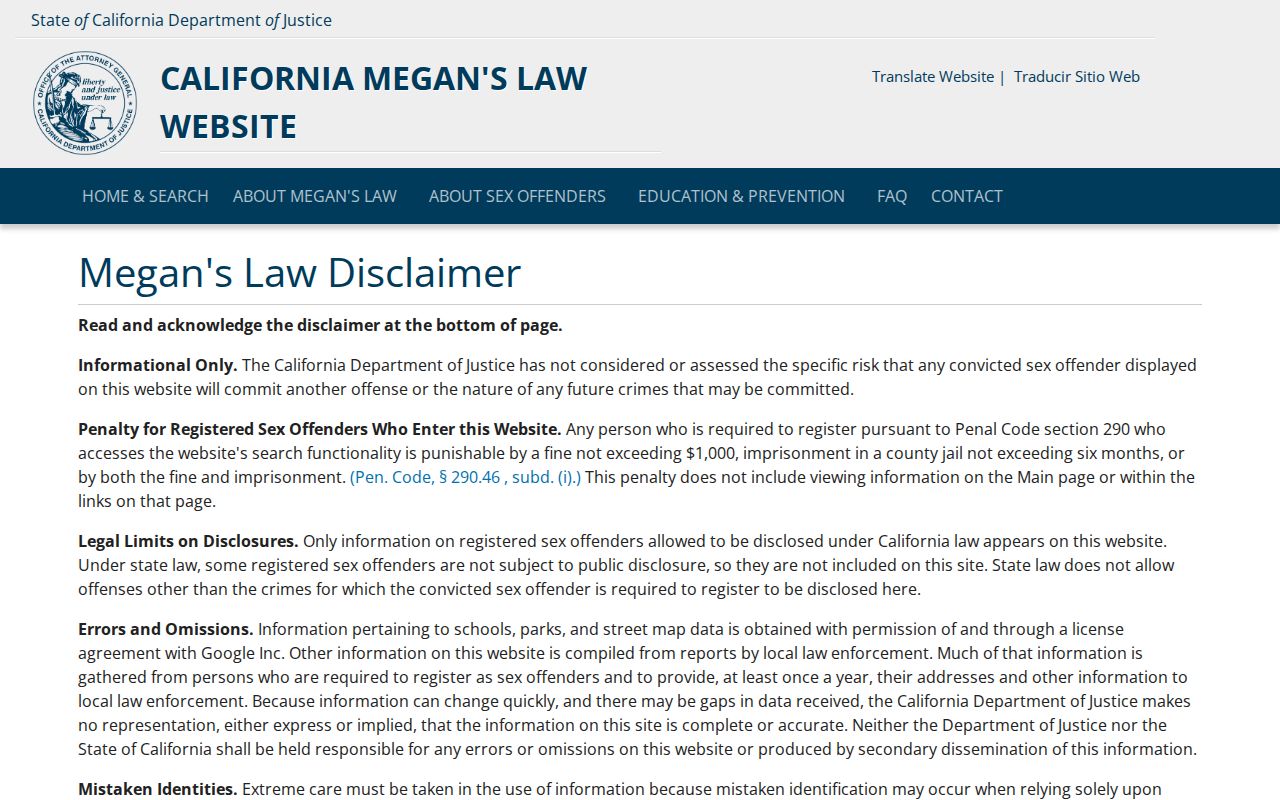
The registry’s own warning controls use. Do not use a lookup result to stalk, harass, threaten, or harm anyone.
Lawful Boundaries for Livermore Lookup
California records law opens nonexempt records but does not erase confidentiality statutes. CPRA requests under Government Code §7920.000 et seq. should describe an existing record, department, date range, address, or spelling. Agencies generally determine within 10 calendar days whether responsive records exist, with a possible 14-day unusual-circumstances extension. Ask for segregable nonexempt portions rather than a custom investigation.
Safe at Home, voter privacy rules, adoption confidentiality, juvenile and sealed court files, protected addresses, medical information, and DMV restrictions can all make an expected match unavailable. A missing result may mean no responsive record, no public release, an unindexed file, or a wrong name. Contact the custodian to correct a source record instead of treating a search result as the record itself.
Lawful use. A Livermore resident lookup is appropriate for personal research, family history, and civic understanding. Never use a person’s record to stalk, harass, intimidate, or harm anyone.